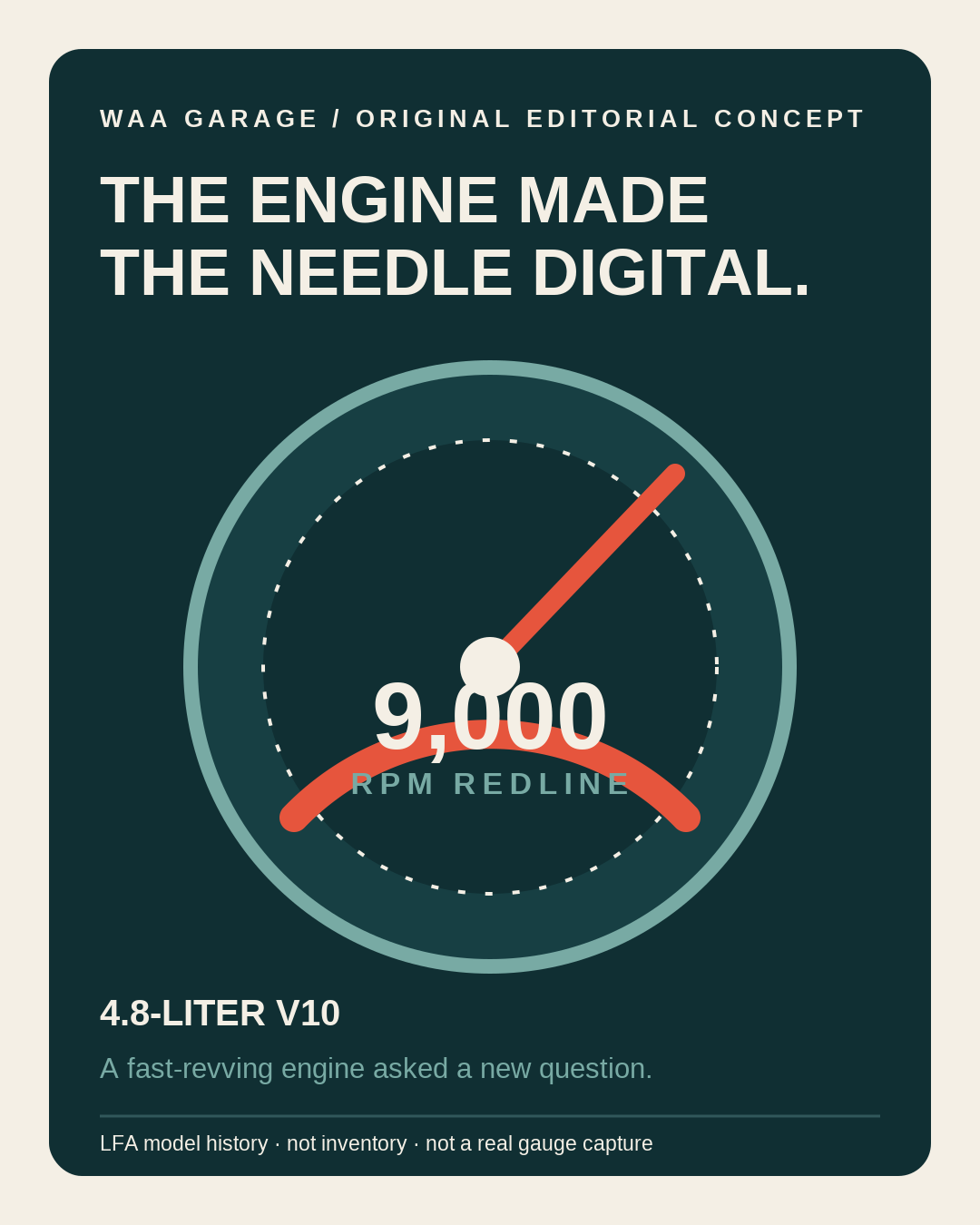
The engine made the needle digital.
When the LFA’s fast-revving V10 outran a conventional needle, Lexus made the tachometer part of the engineering answer.
A display designed around an engine.
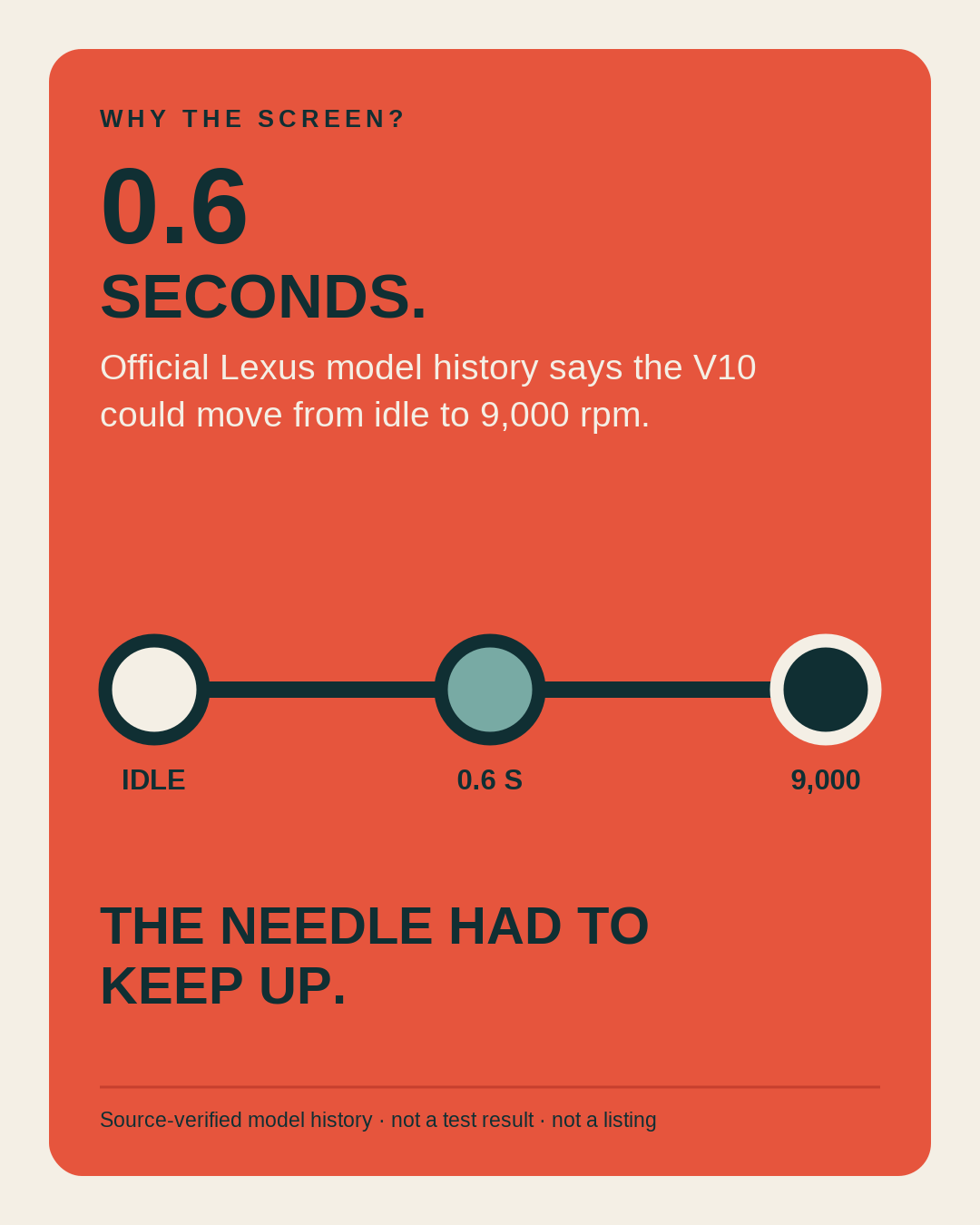
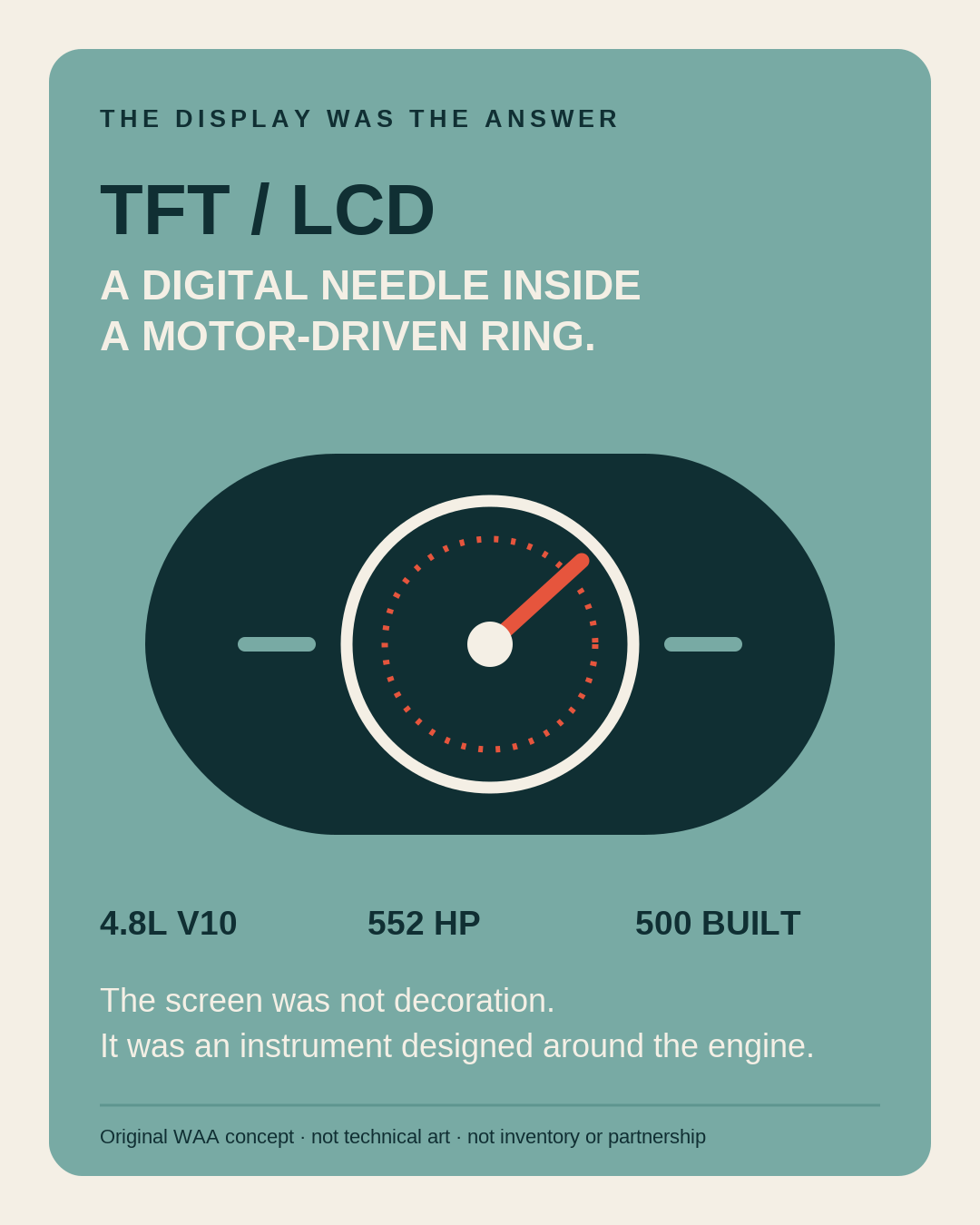
Lexus records the LFA's 4.8-liter V10 at 552 horsepower with a 9,000 rpm redline. Its model history says the engine could move from idle to 9,000 rpm in 0.6 seconds.
That response created an instrumentation problem. Lexus paired the engine with a TFT/LCD meter cluster and an LCD needle designed to keep up. The compact hooded display also used a motor-driven movable ring. The screen was not decoration added after the engineering; it was part of how the driver could read it.
The LFA's 500-car run was hand assembled. That production fact and the digital tachometer describe the model's design story—not the condition, ownership, availability, originality or value of any individual car.
Read the Lexus USA model history ↗ · Read Toyota's LFA debut record ↗ · Read Lexus Korea's LFA history ↗
Primary sources rechecked November 8, 2026.
Keep the engineering story separate from the car in front of you.
Model history can explain why a design matters. It cannot verify an individual vehicle. Inspect the actual structure and systems, review its records and disclosures, confirm identity and ownership, and price the specific example rather than the model legend.
Original WAA editorial concept illustrations. Not Lexus photographs, logos, technical drawings, dashboard captures, AI scenes, actual inventory, owner footage or a partnership. No vehicle availability, condition, ownership or valuation is represented. This is a silent illustrated resource, not a new video.
Bring evidence to the inspection.
Use the printable buyer checklist on the actual vehicle, or explore WAA Garage's free planning tools.