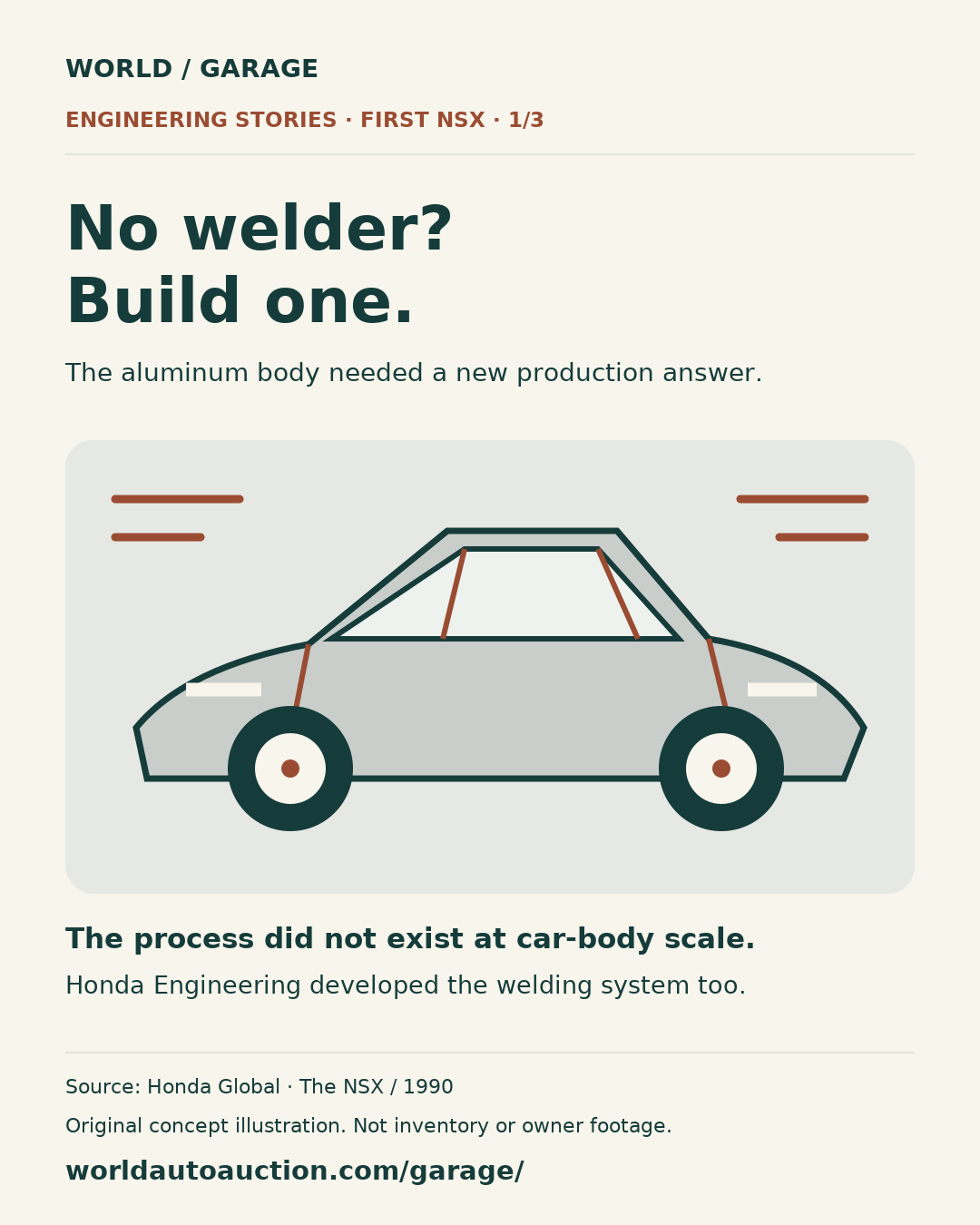
No welder? Build one.
An illustrated NSX engineering story: an aluminum body changed the car—and the machinery needed to build it.
The material changed the process.
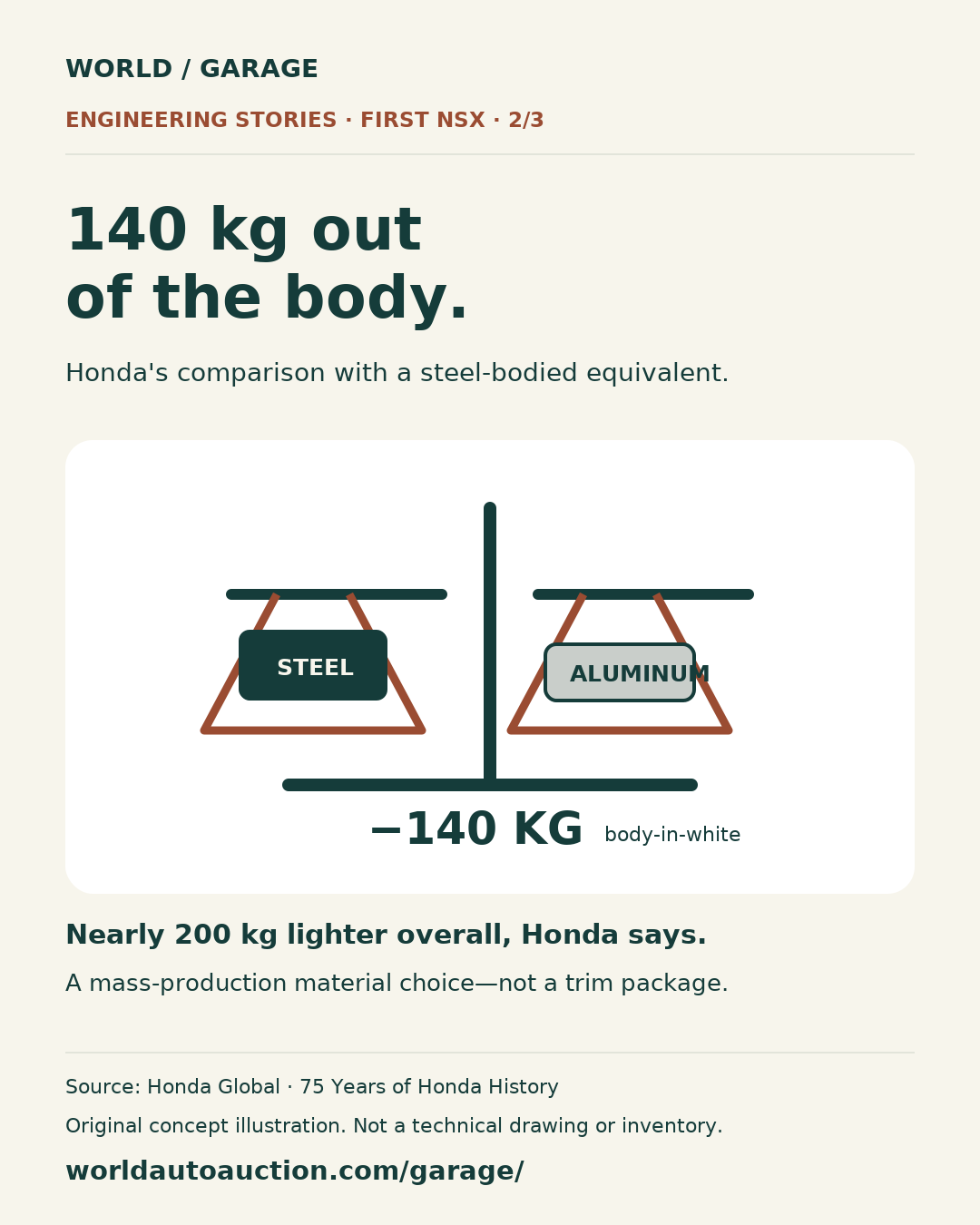
Honda’s development history says the first-generation NSX used the world’s first all-aluminum monocoque body for a mass-produced vehicle. Compared with a steel-bodied equivalent, Honda records a 140 kg reduction in the white body and approximately 200 kg across the complete car.
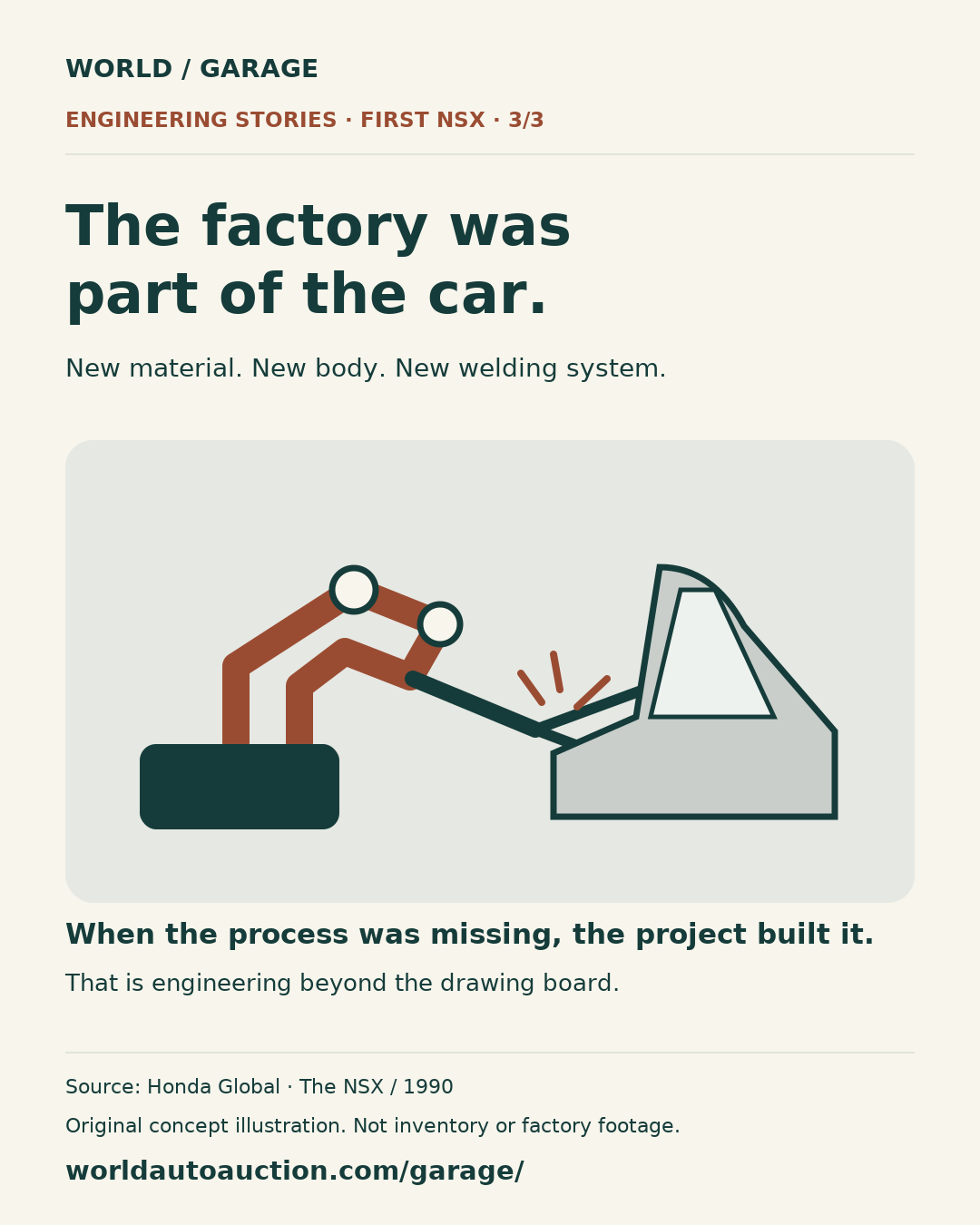
That result did not come from swapping one material into an unchanged factory. Honda’s production history records purpose-developed aluminum body-welding equipment, including a spot-welding robot system with a more rigid gun arm and larger current than the conventional steel-body system.
Read Honda’s NSX development history ↗ · Read Honda’s production-technology history ↗
Primary sources rechecked October 22, 2026.
The tool can be part of the invention.
The useful lesson is broader than one car: a product decision can force a manufacturing decision. The body material, forming methods, welding equipment and dedicated production plan had to work as one system.
That history is not evidence about the condition, ownership, location or value of any individual NSX. If a design story starts a real-car search, inspect the actual vehicle, verify its records and price the specific example in front of you.
Original WAA editorial concept illustrations. Not Honda technical drawings, AI scenes, actual inventory, a real factory, exact equipment, owner footage or a partnership. No vehicle availability, condition or valuation is represented. This is a silent illustrated resource, not a new video.
Bring evidence to the inspection.
Use the printable buyer checklist for the actual vehicle, or explore the free WAA Garage planning tools.