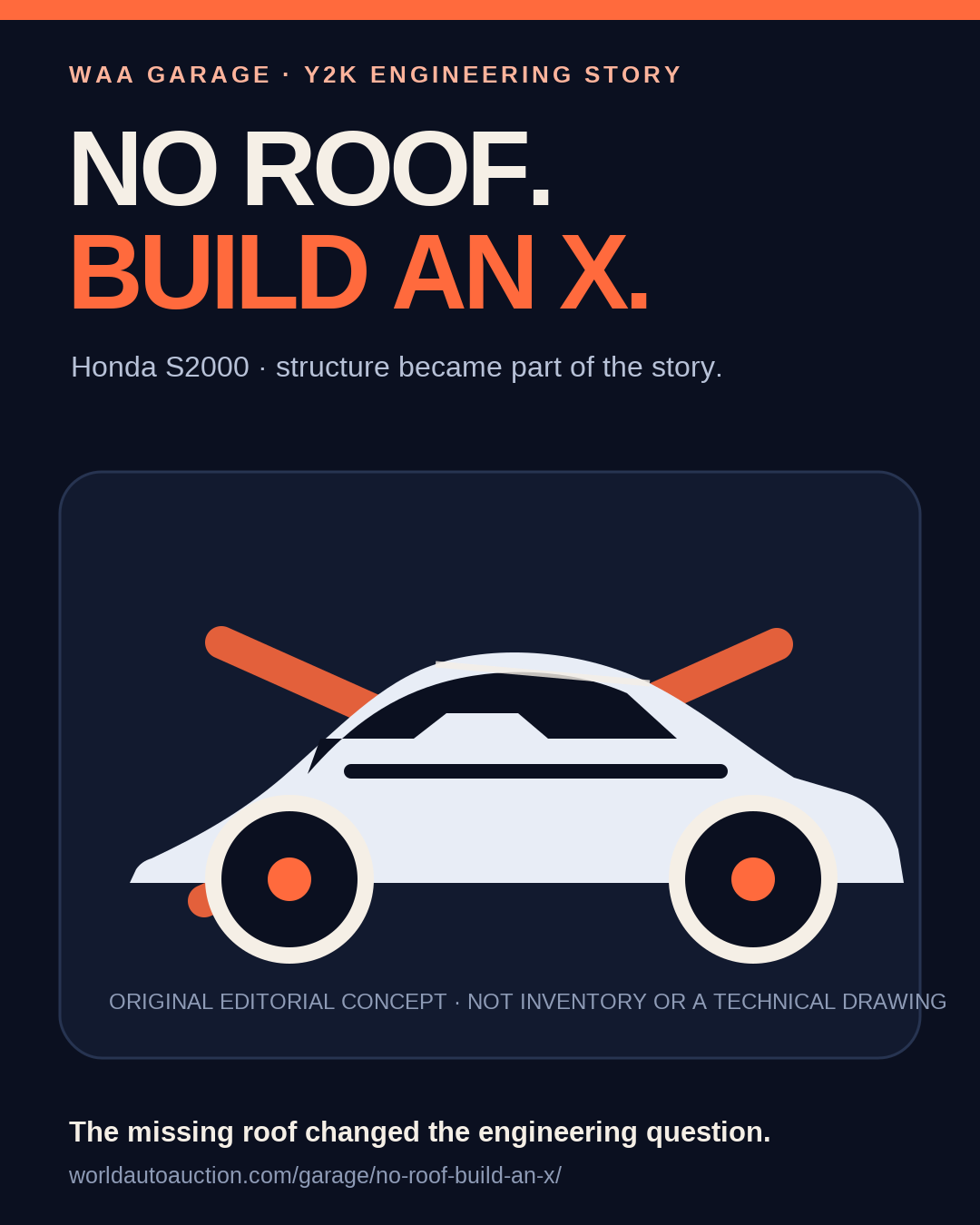
No roof. Build an X.
Honda did not replace the missing roof. It routed structure through the floor.
The engine gets the headline. The floor carries the plot.
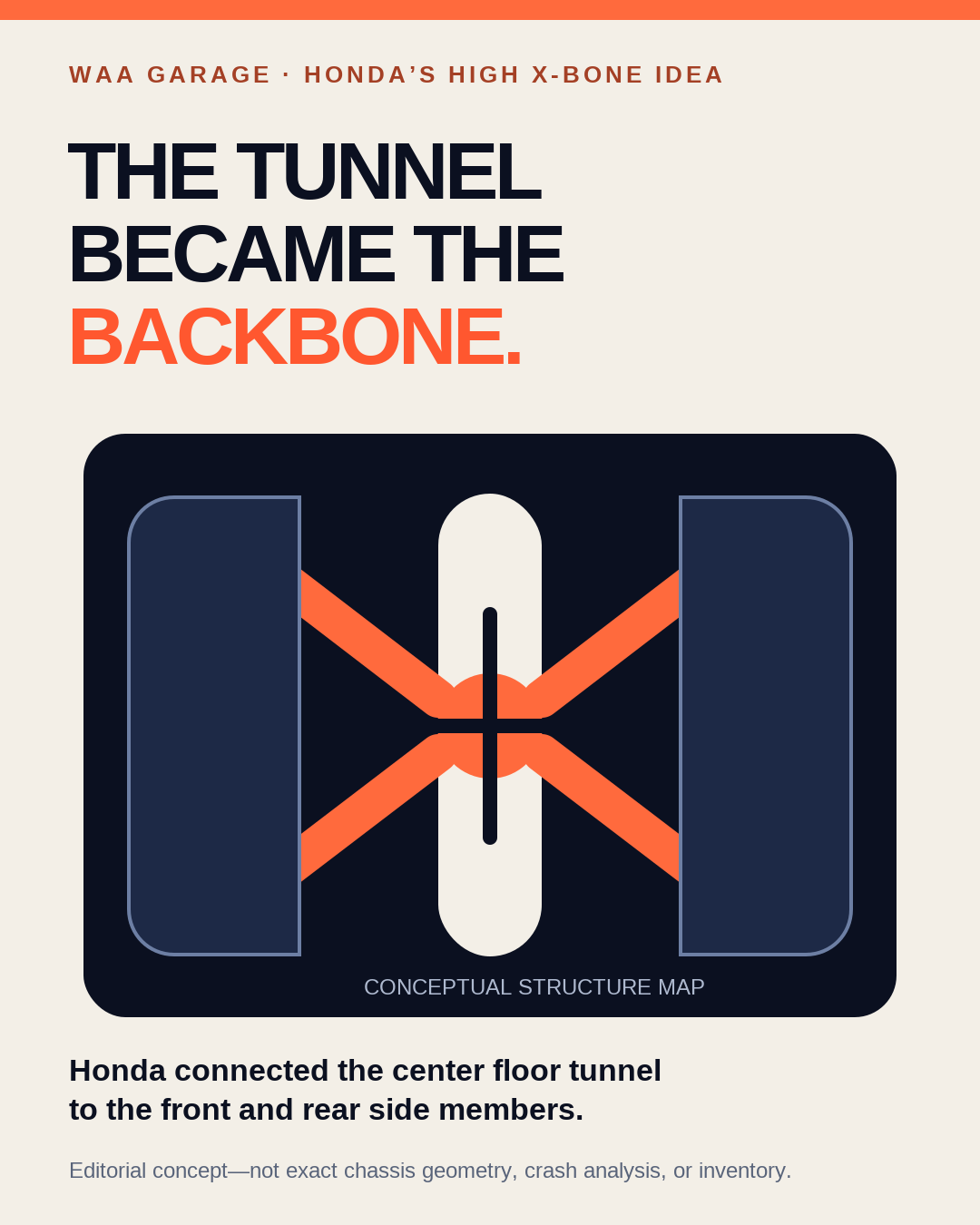
Honda’s 1999 open-body release describes a “high X-bone frame.” The center floor tunnel acts as a structural backbone, tied on a common plane to the front and rear side members. Honda said the resulting open structure achieved rigidity and collision safety comparable to a closed body.
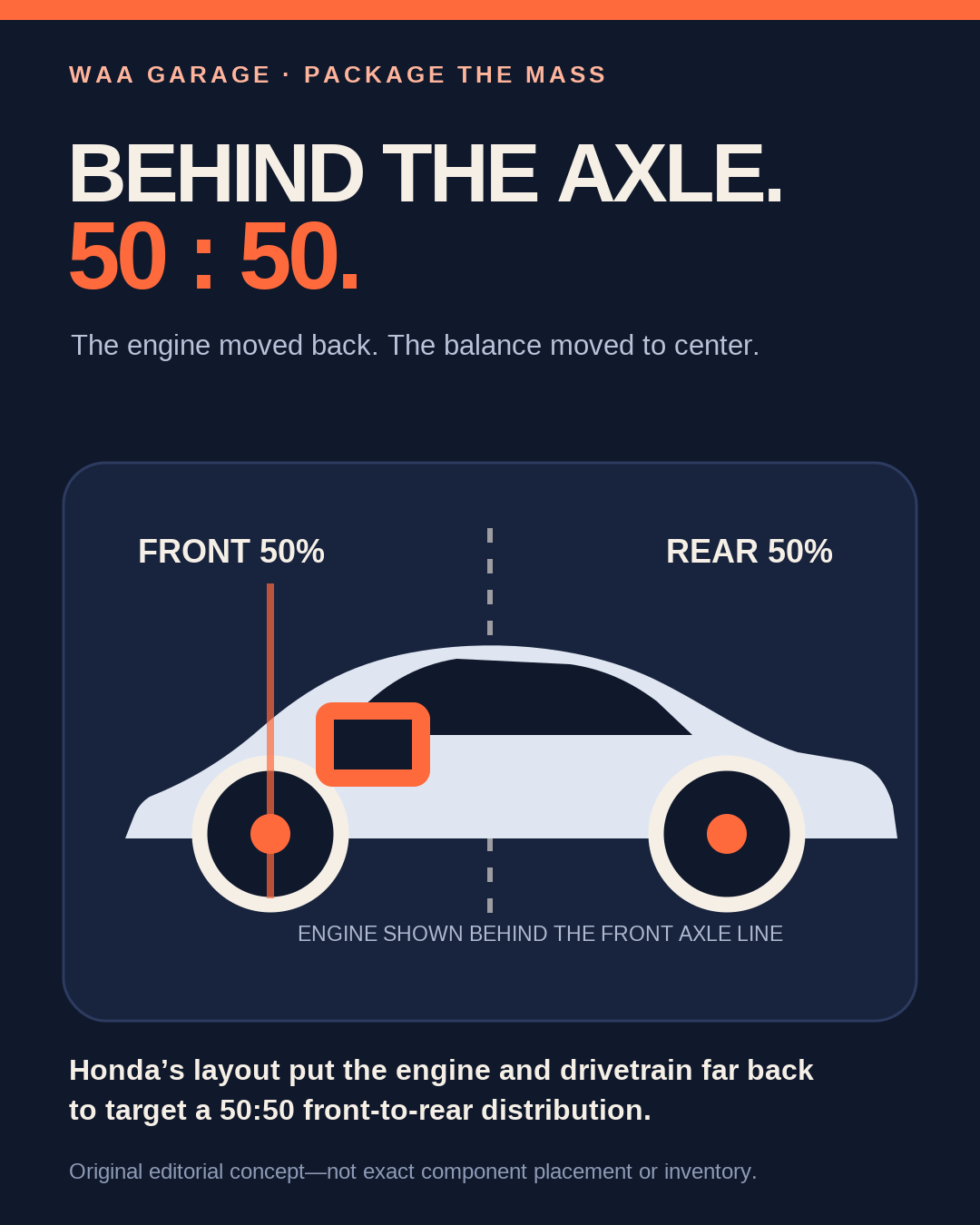
The package worked with the chassis layout. Honda’s U.S. engineering record says the engine and drivetrain were placed far back in the chassis to target a 50:50 front-to-rear weight distribution. The U.S. launch-spec 2.0-liter engine also carried a 9,000 rpm rev limit—but the quieter engineering story is how the structure and mass were arranged around an open cabin.
Read Honda’s open-body structure release ↗ · Read Honda’s S2000 engineering record ↗
Primary sources rechecked October 27, 2026.
A design story is a reason to look closer—not skip the inspection.
Engineering history can explain why a model interests people. It cannot establish the condition, ownership, location, originality or value of an individual car. For a real S2000—or any older enthusiast car—inspect the actual structure, review its records and price the specific example in front of you.
Original WAA editorial concept illustrations. Not Honda technical drawings, exact chassis geometry, crash analysis, AI scenes, actual inventory, owner footage or a partnership. No vehicle availability, condition or valuation is represented. This is a silent illustrated resource, not a new video.
Bring evidence to the inspection.
Use the printable buyer checklist on the actual vehicle, or explore WAA Garage’s free planning tools.